
Lake Kivu is not one stop with one personality. Rubavu in the north feels like a lively waterfront town near Volcanoes; Karongi sits farther along the lake with a quieter resort rhythm; Rusizi is the southern gateway closest to Nyungwe. The right choice depends on what your route needs, not just which view looks best in a brochure. The Rwanda guides and seven-day primate itinerary are useful context when deciding whether the lake is a pause or a destination.
The lake's value is time. After a gorilla trek, a long forest day or a cross-country transfer, one night can create breathing room. Two nights let you add a boat or kayak, walk the waterfront, or simply stop moving. But Lake Kivu is not a shortcut: road distances between bases are real, and changing towns can turn a restful section into another transfer day.
Lake Kivu at a glance
- Location
- Western Rwanda, between the Virunga region and Nyungwe
- Main bases
- Rubavu, Karongi and Rusizi
- Core experiences
- Lakeside walking, kayaking, boat outings, cycling, viewpoints and quiet time
- Best fit
- A route that needs a pause, especially after primate trekking or before Nyungwe
- One night
- Enough for a scenic stop or a well-placed overnight
- Two nights
- Better if you want an activity and genuine downtime
- Main trade-off
- The lake is spread out; the wrong base can add hours to the route
Experience
What travellers actually do here
-
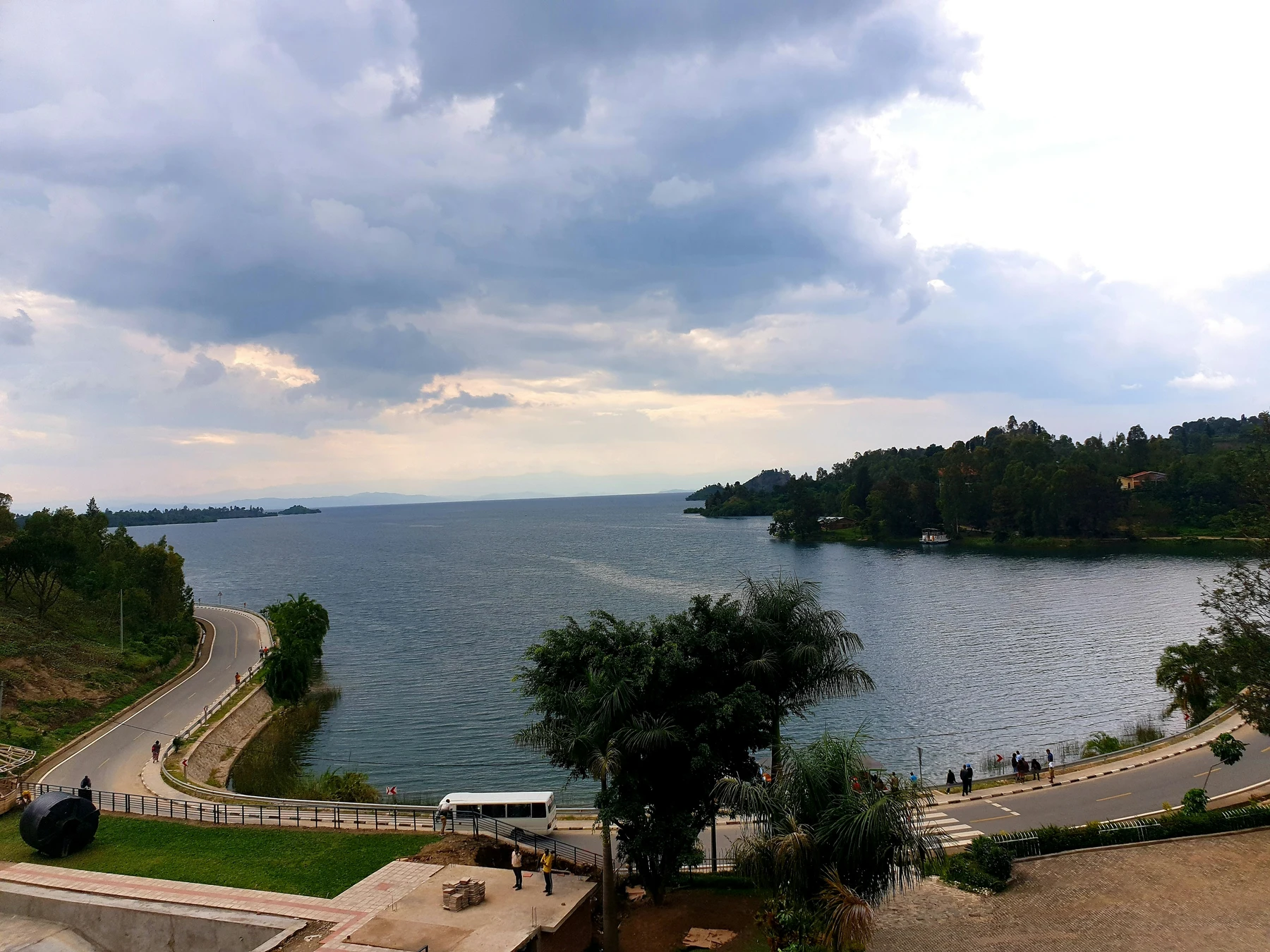
Take the water at its own speed
Visit Rwanda lists kayaking, canoeing, stand-up paddleboarding and boat experiences around the lake. Availability depends on the base, operator and weather; book through a current provider rather than assuming every town offers the same outing.
-
Walk, cycle or watch the shore
The Congo Nile Trail runs along the eastern shore between Rubavu and Rusizi. You do not need to commit to the whole trail to benefit from the landscape: a short walk, a cycling stage or time by the water can be enough.
-
Use the lake to connect western Rwanda
Rubavu is about an hour from Volcanoes according to Visit Rwanda guidance. Rusizi is the practical southern base for Nyungwe. Karongi sits between them and is better treated as a destination in its own right than as a quick bridge between parks.
-
Make room for ordinary time
The strongest Lake Kivu day may include a slow breakfast, a short outing, a market or waterfront walk and an early night. The point is not to fill every hour after a demanding trek.
Three bases, three different jobs
Rubavu
Rubavu, historically also called Gisenyi, is the northern lakeside base. It is the practical choice after Volcanoes: close enough to connect without losing a full day, with a waterfront, hotels, restaurants and access to kayaking or a short lakeside outing. It feels more like a town than a secluded retreat.
Karongi
Karongi, often called Kibuye, is roughly midway along the lake and better suited to a deliberate two-night pause. Hills, islands and a quieter waterfront make it a place to settle. Reaching it from Volcanoes or Nyungwe is part of the experience, but the road time means it should not be presented as a casual detour.
Rusizi
Rusizi, near Kamembe, is the southern gateway and the useful base when Nyungwe is the priority. It can work as a practical overnight around a forest visit, but travellers looking for a classic lakeside holiday should compare the shoreline and activity options with Rubavu or Karongi before choosing it.
Lake Kivu as a route decision
Short connection
Rubavu
Best after Volcanoes when you want a lakeside evening, a waterfront walk or a bookable water activity without sending the route far south.
Real pause
Karongi
Stronger for two nights, slower mornings and a lake-focused stay. It deserves deliberate route time rather than being treated as a convenient midpoint.
Southern gateway
Rusizi
Useful around Nyungwe and the southern route. Choose it for logistics first, then confirm whether the available lakeside experience matches your expectations.
Is Lake Kivu worth slowing down for?
Slow down if…
- You are coming from a gorilla or chimpanzee trek and want recovery time rather than another early start.
- You enjoy water, scenery, cycling, walking or simply being somewhere without a timed wildlife activity.
- You can choose a base that sits naturally between the places already in your route.
- Two nights would make the western section feel coherent instead of like a chain of transfers.
Keep the route tighter if…
- Your itinerary has only one night and the chosen base adds a long out-and-back drive.
- You are expecting a resort experience everywhere around the lake; towns and properties differ considerably.
- A boat or kayak is the only reason for the stop but no current operator or weather window is confirmed.
- You would rather spend the time on Nyungwe trails or in Kigali than add another check-in.